Pricing IT device logistics has always involved one of two bad deals.
Option one: pay per shipment. Sounds simple. But somewhere between the order page and your invoice, a courier margin gets buried. You pay more than the courier charges, and the difference disappears into the platform's revenue. Nobody explains it. You just notice the number feels high.
Option two: pay a flat fee. Feels predictable. But now you're paying the same amount whether you shipped two laptops this month or twenty. The cost has nothing to do with your actual activity.
Today we're releasing a third option. OPS.
What is OPS
OPS stands for Operational Points System. It is the new credit that powers everything on the Raal platform.
One OPS, one price list, one transparent bill. Every action on Raal — shipments, customs clearance, accessories, API calls, data exports — is priced in OPS, in plain sight, before you confirm. You always know exactly what something costs.
Examples:
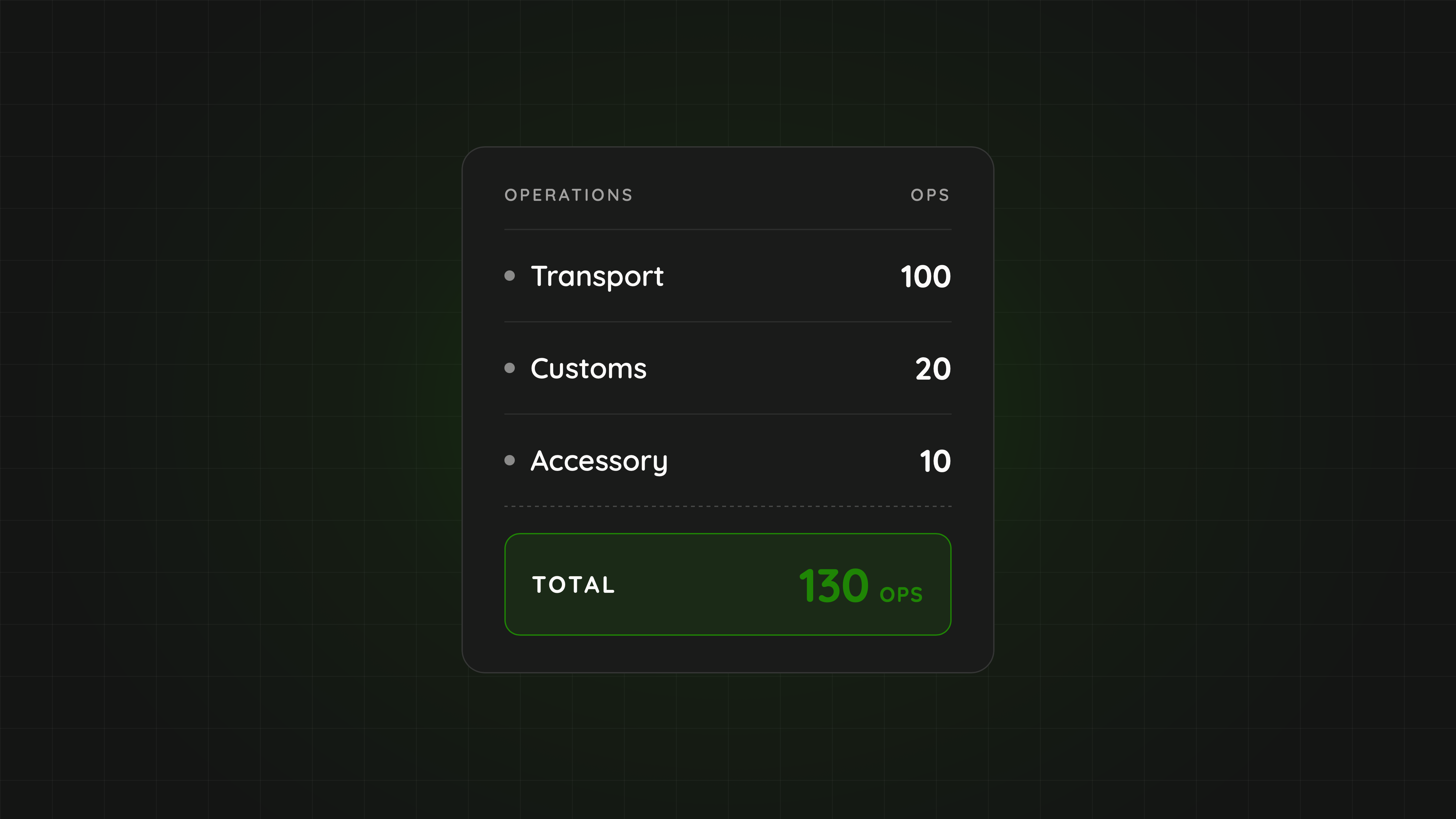
- Ship a laptop in Raal packaging: 100 OPS
- Ship a laptop in your own packaging: 50 OPS
- Customs clearance: 20 OPS
- Add headphones, mouse, keyboard, cables, or dock: 10 OPS each
- API call for employee data: 2 OPS
- Data export: 5 OPS
Why this is fairer
On any Raal subscription plan, logistics costs become pass-through at our volume courier rates. You pay what couriers actually charge, not a marked-up version of it. OPS pays for the platform, the automations, the customs expertise, the tracking, and the support. Logistics pays for logistics.
That separation matters. You can see exactly what the platform costs, and exactly what moving a device costs. No black box. No margin buried in a line item.
The new plans
Five tiers, designed for every stage of a distributed IT operation:
Pay as you go. No subscription. Pay per order in currency, same logic as before, just at higher rates from launch. For teams that ship occasionally and want zero commitment. Pay as you go sits outside the OPS system by design, no OPS Ledger, no rollover, no payment options.
Starter. From €179/month. Includes 100 OPS per month. For small teams building a global device process for the first time.
Pro. From €599/month. Includes 500 OPS per month. For growing teams moving devices across countries regularly. Most popular.
Business. From €1,599/month. Includes 1,000 OPS per month. For scale-ups with high device volume and fast headcount turnover.
Enterprise. Custom OPS packages. Full integration, hands-on implementation, dedicated success manager.
All plans available in EUR, GBP, and USD. Yearly billing includes 10% off, an extra month of OPS, and all credits available upfront.
The OPS Ledger
OPS are accounted for the way a bank accounts for money.
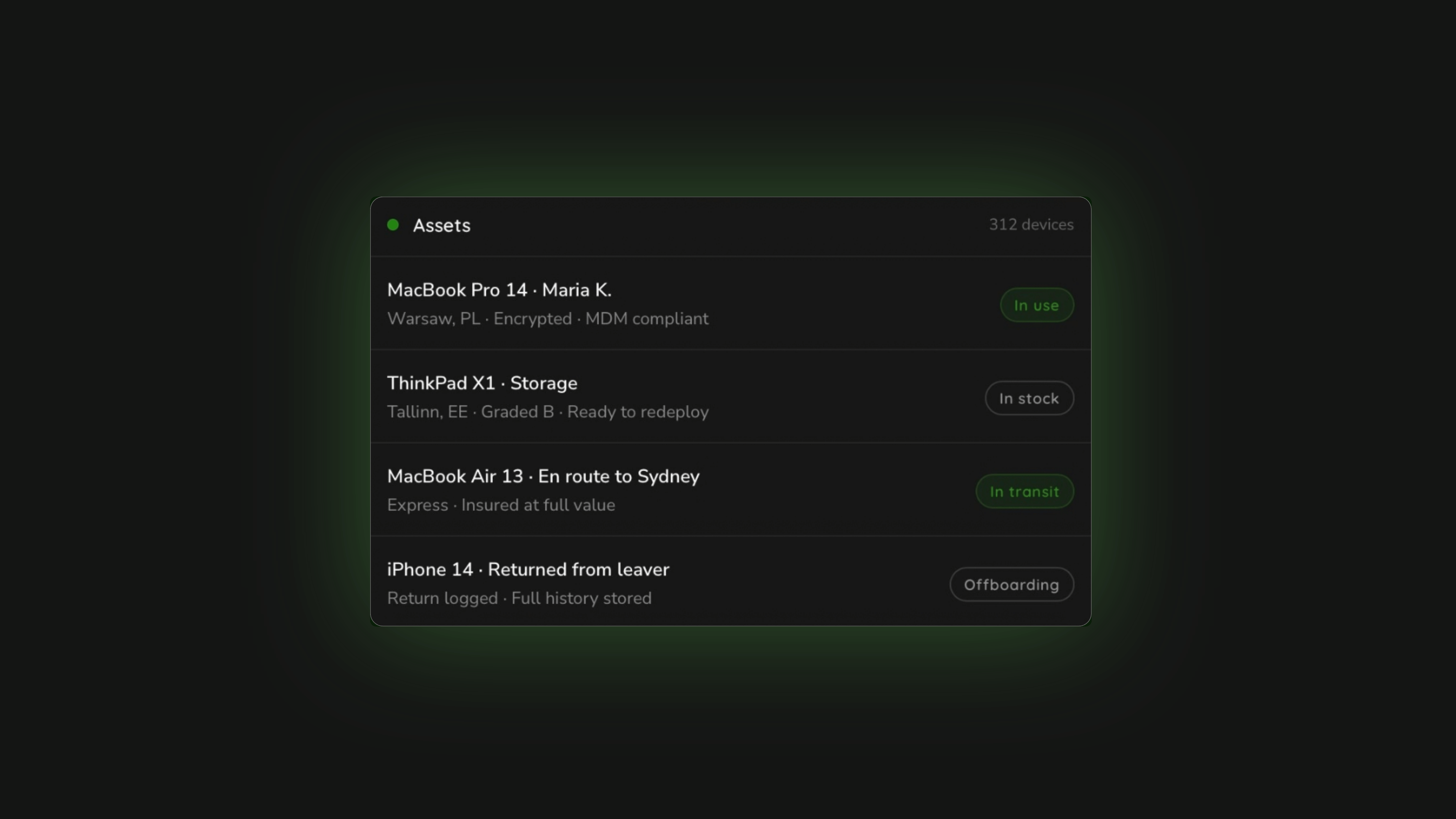
Every allocation, top-up, rollover, and consumption is recorded as a line item in the OPS Ledger, tied to the specific order or action that triggered it. Admins can filter by period and export a clean report for Finance, or just check where this month's OPS went.
No mystery charges. No month-end surprises. No "where did those credits go?" conversation with your ops team.
Flexible payment options
On any subscription plan, you choose how you pay for logistics orders:
- Pay at order placement: 0 OPS per order
- Pay after order fulfilment: 20 OPS per order
- Monthly consolidated invoice: 500 OPS per month
Set the policy once in Settings. Change it when your finance process changes. These options are available on subscription tiers only.
If you run out of OPS
Top up directly from your dashboard at any time. Top-up OPS cost more per OPS than your subscription rate, so topping up regularly is a signal you've outgrown your plan. The alternative is moving up to a higher subscription tier where the per-OPS rate is lower. Services are never interrupted either way.
Unused subscription OPS roll over up to 2x your monthly allocation. Top-up OPS never expire as long as your subscription is active, and are consumed first.
No per-device or per-seat fees. Ever.
We don't charge per employee or per device. Everything on subscription plans is accounted for in OPS, which ties cost to what you actually do on the platform, not how many names are in your HR system.
A team doing ten device moves a month and a team with the same headcount doing fifty pay proportionally to their actual activity. Not a flat rate that benefits whichever team uses the platform less.
The redesigned portal
Shipping at the same time: a completely rebuilt Raal Customer Portal.
Dark, fast, and designed for people who open Raal every day. New navigation, a clearer order flow, the OPS counter and Ledger in plain view, and faster screens across every device size. The design system is consistent end-to-end. If you've been using the old portal, you'll notice the difference immediately.
Not sure which plan fits?
The calculator at raal.io/estimate shows PAYG versus every subscription tier side by side, based on your actual shipping pattern. Put in your monthly volume and see the real number. No email required.
→ See the new plans → Run your numbers → Create an account
FAQ
What exactly is OPS? OPS (Operational Points System) is the credit used across the Raal platform on subscription plans. Every actionб shipments, customs clearance, accessories, API calls, data exportsб is priced in OPS. You buy OPS through your subscription plan and spend them on platform activity.
Does OPS replace money? For platform activity, yes. For logistics costs, no. On subscription plans, courier and logistics costs are pass-through, billed in currency at our volume rates. OPS covers the platform layer.
What about Pay as you go? Pay as you go sits outside the OPS system. PAYG customers pay per order in currency, the same logic as before, at updated (higher) rates. No OPS Ledger, no rollover, no payment options. If you ship regularly, a subscription will almost certainly cost less, use raal.io/estimate to compare.
I'm an existing Raal customer. Will my price go up? Not immediately. Existing customers have 30 days from launch with no pricing change. Use that window to run your usage through the calculator, compare plans, and choose the tier that fits. If you move to a subscription, your effective rate stays the same as what you pay today.
What's the OPS Ledger? The OPS Ledger is a full transaction record of every OPS movement on your account — allocations, top-ups, rollovers, shipment deductions, customs deductions, API calls. Filter by date range and export for Finance. Think of it as a bank statement for your device operations.
What happens if I run out of OPS mid-month? You can top up OPS from the dashboard at any time. Top-up OPS are priced higher per OPS than your subscription rate. Alternatively, upgrade to a higher tier with a better per-OPS rate. Services are never interrupted.
Do OPS expire? Unused subscription OPS roll over up to 2x your monthly allocation. Top-up OPS never expire as long as your subscription is active. Top-up OPS are consumed before subscription OPS.
Is there a per-device or per-seat fee? No. Everything on subscription plans is priced in OPS. You pay for what you do, not for how many employees or devices are in your system.